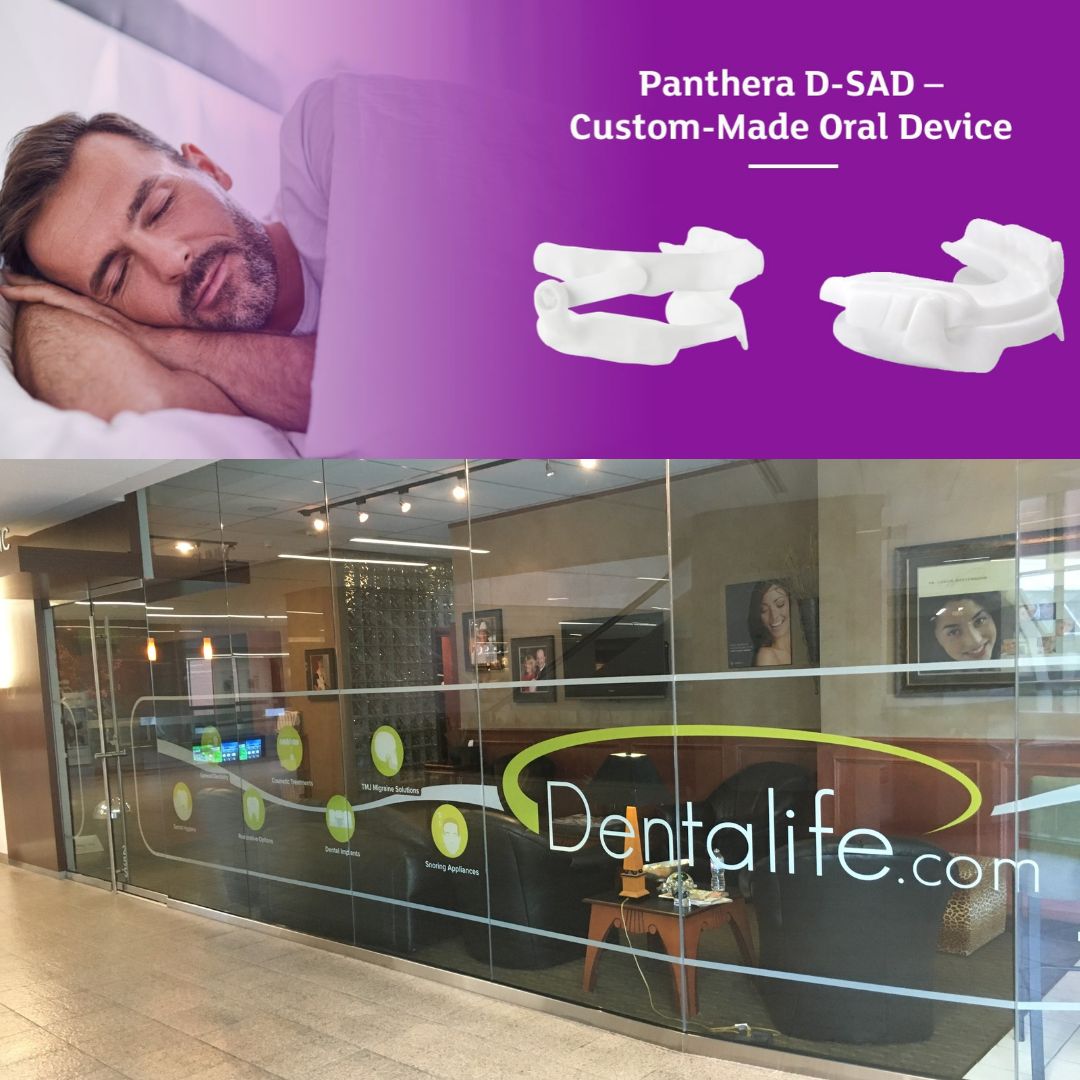
You sleep for eight hours, yet wake up feeling exhausted. Your partner complains about your snoring. Perhaps you’ve been diagnosed with sleep apnea but can’t get comfortable wearing a CPAP mask.
Sound familiar?
These problems may have something in common: the way you breathe while sleeping.
For some people, a professionally fitted dental sleep appliance can help reduce snoring, improve nighttime breathing, and make restful sleep more achievable. But choosing the right appliance involves more than simply buying a mouthguard.
At our practice, the Drs. Westersund approach sleep-related breathing concerns through Airway Focused Dentistry, considering how your airway, jaw position, bite, and temporomandibular joints (TMJ) work together.
What Problems Can a Dental Sleep Appliance Help Solve?
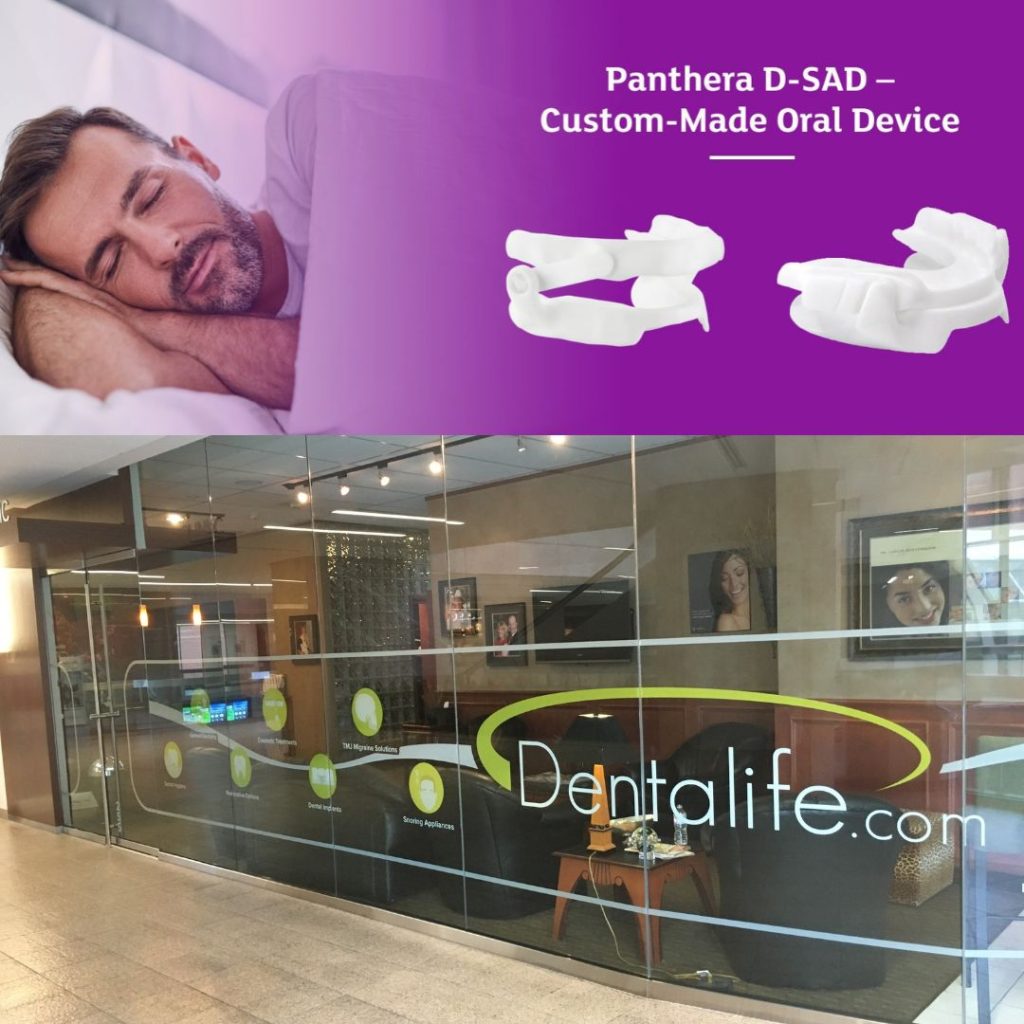
Dental sleep appliances, also called oral appliances or mandibular advancement devices, are designed to gently position the lower jaw forward while you sleep. This can help keep the upper airway more open.
Depending on your diagnosis and individual circumstances, oral appliance therapy may help address several problems.
- Loud, persistent snoring: Reducing airway obstruction and vibration may make snoring less frequent or less intense.
- Obstructive sleep apnea (OSA): Certain appliances can reduce breathing interruptions during sleep, particularly in appropriately selected patients.
- Difficulty tolerating CPAP: For some patients who find CPAP masks uncomfortable or difficult to use consistently, oral appliance therapy offers an alternative.
- Interrupted or restless sleep: Improving nighttime breathing may reduce breathing-related awakenings.
- Daytime tiredness and sleepiness: Effective treatment of sleep-disordered breathing may improve alertness and daytime functioning.
- Morning headaches: When headaches are associated with disrupted breathing during sleep, effective treatment may help.
- Disrupted sleep for your partner: Less snoring can mean better nights for both of you.
These symptoms can have several causes. A dental appliance is not the answer to every sleep problem, and suspected sleep apnea requires a medical assessment and appropriate sleep testing.
Why Not Just Buy a Cheap Sleep Appliance Online?
It’s a perfectly reasonable question.
Walk into a pharmacy or search online, and you’ll find anti-snoring mouthguards advertised at a fraction of the price of professionally fitted dental appliances.
Some promise immediate results. Others claim to be comfortable, adjustable, and suitable for almost everyone.
So what’s the difference?
An over-the-counter appliance is primarily a product. Professionally managed oral appliance therapy is a treatment process.
A generic appliance cannot independently determine whether you have obstructive sleep apnea, how much your jaw should be advanced, or whether that position could aggravate an existing TMJ problem.
A professionally fitted appliance is designed around your teeth, bite, and jaw function. Adjustable designs allow the jaw position to be modified gradually, while follow-up appointments help identify discomfort, bite changes, and other side effects.
Clinical guidelines favour custom, adjustable appliances over non-custom devices when oral appliance therapy is prescribed for obstructive sleep apnea.
The question isn’t simply which appliance costs less. It’s whether the treatment is appropriate, comfortable, and demonstrably effective.
What About Comfort, Cost, and Long-Term Results?
People considering dental sleep appliances often have understandable concerns.
Will I be able to sleep comfortably with something in my mouth?
Most appliances require an adjustment period. A custom fit and gradual adjustments can help improve comfort, although not everyone adapts equally well.
Will it permanently change my bite?
Long-term appliance use can cause tooth movement or bite changes. That’s one reason regular monitoring matters.
Could it make my TMJ pain worse?
It could. Some patients experience jaw soreness or changes in TMJ symptoms. An assessment of existing jaw problems is particularly important before treatment.
Will it work as well as CPAP?
Not necessarily. CPAP generally provides greater reduction in breathing interruptions, particularly in more severe cases. However, oral appliances can be useful for selected patients who prefer them or cannot tolerate CPAP.
How much does a custom dental sleep appliance cost?
Costs vary depending on the appliance, clinical assessment, adjustments, and follow-up care. Insurance coverage also varies. Understanding what’s included in treatment is more useful than comparing appliance prices alone.
Will it cure my sleep apnea?
Oral appliances manage sleep-related breathing problems; they don’t necessarily eliminate the underlying condition. Follow-up sleep testing helps determine whether treatment is sufficiently effective.
Why TMJ Knowledge Matters in Sleep Appliance Therapy
Here’s something many people don’t realize.
Your lower jaw isn’t simply a place to attach a sleep appliance. It’s part of a complex system involving muscles, joints, teeth, and the airway.
The temporomandibular joints connect your lower jaw to your skull. They help you speak, chew, swallow, and move your jaw.
A mandibular advancement appliance changes the position of your lower jaw while you’re sleeping. That change can improve airway space, but it also changes how your jaw muscles and joints are positioned.
For someone with an existing TMJ disorder, that matters.
Symptoms worth discussing before treatment include:
- Jaw pain, stiffness, or difficulty opening your mouth
- Clicking, popping, or locking of the jaw
- Facial muscle tension or soreness
- Headaches associated with jaw dysfunction
- Ear-area discomfort without an obvious ear problem
- Teeth grinding or clenching during sleep
These symptoms don’t automatically rule out oral appliance therapy. However, they deserve careful consideration before treatment begins.
The objective is to improve nighttime breathing without unnecessarily compromising jaw comfort and function.
That’s where the Westersunds’ understanding of TMJ-related problems becomes particularly relevant.
Airway Focused Dentistry at Dentalife: Looking Beyond the Snoring
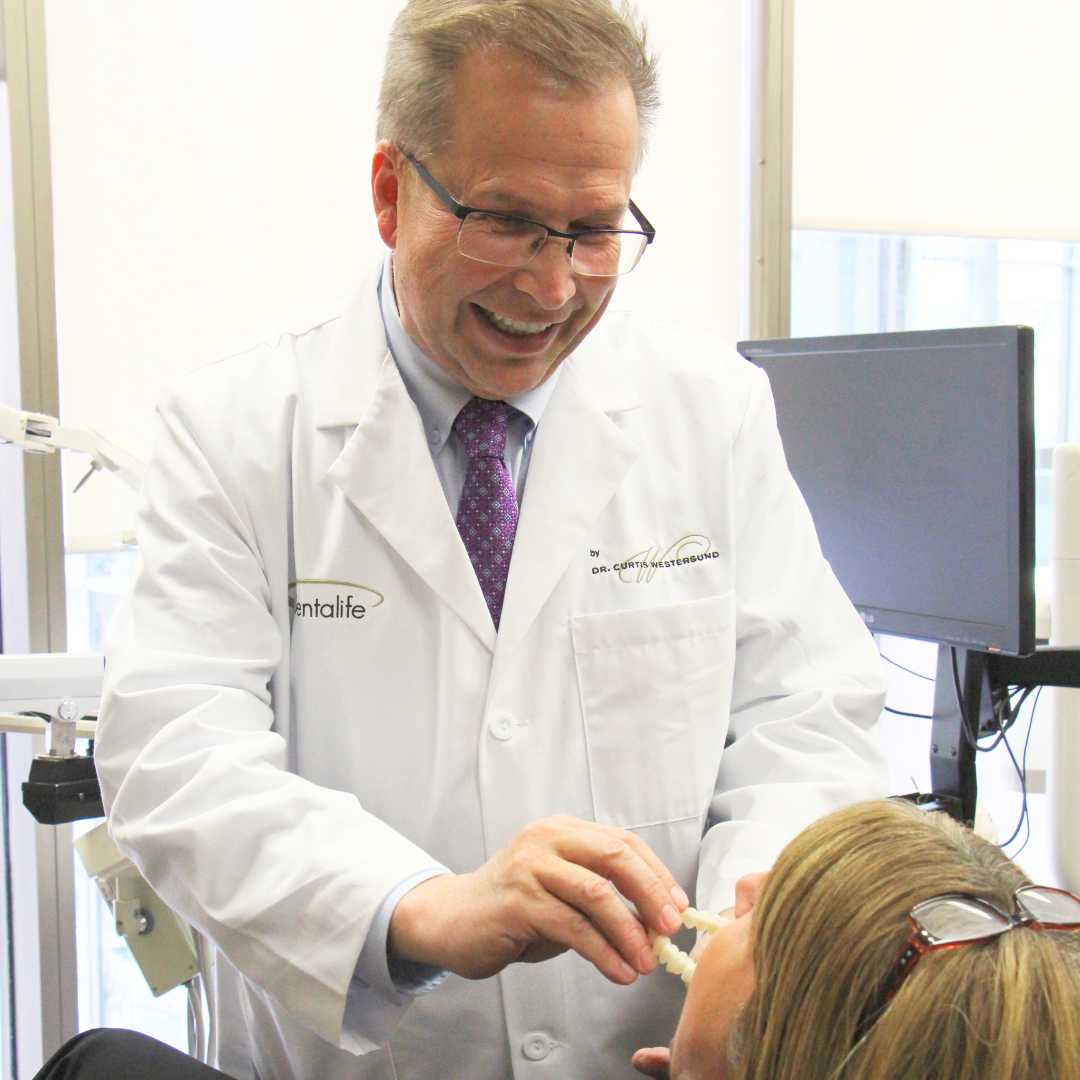
At Dentalife in Downtown Calgary, Dr. Curtis Westersund and Dr. Connor Westersund approach sleep-related breathing problems by considering more than the symptoms.
Their Airway Focused Dentistry philosophy recognizes that the position of your jaw, the way your teeth fit together, tongue position, and airway anatomy may all influence how you breathe during sleep.
Dr. Curtis Westersund brings decades of clinical experience, with a particular focus on TMJ disorders, jaw biomechanics, chronic pain, and sleep-related breathing concerns. His work includes teaching and research into the relationships between jaw function and other parts of the body. Dr. Connor Westersund contributes his experience in modern restorative and general dentistry to their shared approach to patient care.
Rather than assuming every patient needs the same appliance, their approach emphasizes understanding the individual situation.
That may involve:
- Listening and evaluating: Understanding your sleep concerns, medical history, jaw symptoms, and previous treatment experiences.
- Examining the jaw and bite: Assessing teeth, jaw movement, TMJ function, and other relevant oral structures.
- Coordinating sleep assessment: Working with a physician or sleep specialist to establish an appropriate diagnosis and treatment plan.
- Considering appliance therapy: Determining whether a custom, adjustable appliance may be suitable.
- Monitoring treatment: Reviewing comfort, jaw function, potential bite changes, and treatment effectiveness, including follow-up sleep testing when indicated.
This approach is especially relevant when patients experience both sleep-related breathing difficulties and TMJ symptoms.
Importantly, a sleep appliance and a TMJ appliance are not necessarily the same thing. They may serve different purposes and require different designs and adjustments.
Better Sleep Starts With Understanding the Problem
Snoring might seem like a minor inconvenience. Feeling exhausted every morning might seem like an unavoidable part of a busy life.
But persistent symptoms deserve attention, particularly when they could indicate obstructive sleep apnea.
A dental sleep appliance may be part of the answer. It may not be the right solution for everyone.
At Dentalife, the objective is to help you understand what’s happening, explore appropriate treatment options, and make informed decisions about your breathing, sleep, and oral health.
You don’t have to keep guessing why you’re sleeping poorly.
If you’re struggling with snoring, diagnosed sleep apnea, CPAP discomfort, or sleep concerns accompanied by jaw pain, contact Dentalife in Downtown Calgary.
Book a consultation with Drs. Westersund and discover whether Airway Focused Dentistry could help you breathe and sleep better.