
Modern dentistry offers patients a range of restorative options, but none has transformed smiles as profoundly as white fillings. Sometimes called composite or tooth‑coloured fillings, these restorations are designed to blend seamlessly with natural enamel and support healthier, longer‑lasting teeth. If you have an old silver filling that bothers you or you’re facing your first cavity, it’s worth exploring why the next generation of white fillings has become the material of choice in both general and cosmetic dentistry.
What are white fillings?
Composite fillings are made from a resin matrix filled with fine glass or quartz particles. Dentists apply this material in layers and cure each layer with a special light, shaping it to fit the cavity precisely. This multilayer technique bonds the filling directly to the surrounding tooth structure, creating a strong seal that prevents bacteria from sneaking under the restoration. Tooth‑coloured fillings can be used on both front and back teeth and have become more popular as people prioritize their health and appearance.
Unlike metal amalgam, which combines mercury with other metals and hardens into a dark, silver colour, composite resin sets into a shade that closely matches your enamel. The material has been refined over decades; modern composites are durable, resistant to fracture and able to withstand moderate chewing forces. While amalgam remains a safe and effective option, the advantages of composites have made white fillings a preferred choice for many patients and dentists.
A natural look that enhances your smile
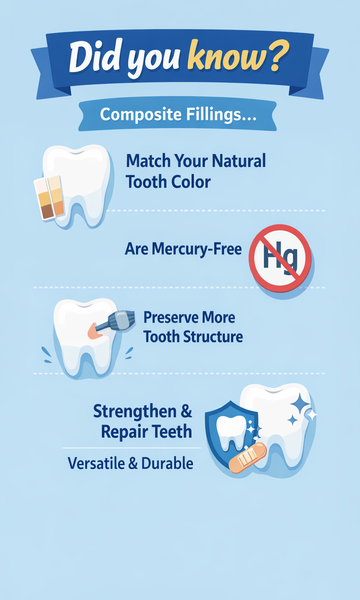
One of the most obvious benefits of white fillings is their cosmetic appeal. The resin material is available in numerous shades, so your dentist can match the colour to your surrounding teeth. This creates a restoration that’s practically invisible, even when it’s placed on front teeth. According to the American Dental Association, tooth‑coloured composites provide good durability and resistance to fracture in small‑ to mid‑size fillings and can be used on either front or back teeth, making them a good choice for people who prefer that their fillings look more natural.
A natural‑looking restoration can boost your confidence and help you smile freely. Many patients find that replacing older metal fillings with composite ones encourages them to show off their teeth more often. Because the resin can be polished to a high shine and shaped precisely, the repaired tooth reflects light like healthy enamel. For people who worry about dark areas showing in their smile, switching to white fillings is an easy way to enhance their appearance without more extensive cosmetic procedures.
Conservative preparation preserves your tooth
Dental preservation is at the heart of modern treatment. When placing a composite filling, dentists remove only the decayed or damaged part of the tooth and leave as much healthy structure intact as possible. WebMD notes that composites bond micro‑mechanically to the tooth, providing further support and sometimes allowing dentists to remove less tooth structure compared with amalgam when preparing for a filling. This conservative approach preserves your natural tooth, which is critical for long‑term oral health.
Because composites bond to enamel and dentin, they also strengthen the tooth rather than simply filling a hole. A good seal reduces the chance of recurrent decay and offers extra protection against cracks or fractures. The Cleveland Clinic points out that fillings in general can strengthen weakened teeth, preserve your natural tooth structure and enhance appearance, and the choice of material can influence how long the restoration lasts. With proper oral hygiene and regular dental visits, composite restorations can serve you well for many years.
Mercury‑free and biocompatible
For patients concerned about mercury exposure, white fillings provide peace of mind. Traditional silver amalgam contains mercury along with silver, tin, copper and other metals. Multiple public health agencies, including the FDA and ADA, consider amalgam safe for most people, but the Cleveland Clinic notes that certain individuals—including pregnant women and those with neurological conditions—are advised to avoid amalgam due to potential mercury sensitivity. Composite resins are mercury‑free and made from biocompatible materials, which makes them an attractive alternative for people seeking a holistic approach.
Beyond being mercury‑free, white fillings are less likely to conduct heat and cold, reducing sensitivity when you enjoy a hot coffee or a cold drink. The composite material doesn’t expand and contract as much as metal, so it’s less likely to stress the surrounding tooth over time. In addition, there is no metallic taste, and people who have sensitivities to metals often find composites more comfortable. Although composites may cost more initially, many patients view them as an investment in their overall health and comfort.
Versatility for repairs big and small
Composite resin isn’t just for cavities. Because it bonds tightly and can be shaped precisely, dentists use it to repair chips, cracks and worn edges on teeth. WebMD lists versatility as one of the major advantages of composites. They are ideal for small cosmetic repairs, such as closing gaps between teeth (diastemas), reshaping slightly misshapen teeth or masking discoloration. This means that the same material can restore function and appearance in a single appointment, saving you time and helping you avoid more invasive treatments like crowns or veneers when issues are minor.
Composite fillings can also be easily repaired or added to if they chip or wear. Unlike amalgam, which may require the entire filling to be removed and replaced, a composite can be patched by etching the old surface and bonding new material. This adaptability further conserves your tooth structure and can extend the life of the restoration.
Supporting overall health and well‑being
Your mouth doesn’t exist in isolation—it’s part of your whole body. Dental problems can affect your digestion, sleep quality and even your risk for systemic diseases. By choosing restorations that preserve healthy tooth structure and reduce exposure to heavy metals, you support your body’s natural balance. Composite fillings help maintain a strong bite and proper chewing function, which in turn aids digestion. They also reduce the chance of cracks that might require crowns or root canals later on. The Cleveland Clinic emphasises that dental fillings treat existing decay, reduce the risk of future damage, restore chewing function and can last a long time.
At Dentalife we take an integrative approach to oral health. We understand that keeping your teeth strong and free from infection h
as ripple effects on your overall well‑being. White fillings align with our philosophy: they protect your teeth while supporting the natural beauty of your smile.
How long do white fillings last?
A common question is whether composite fillings last as long as metal ones. Advances in resin technology have improved the durability of composites dramatically. While they may not always match the 10–15‑year lifespan of amalgam in large, high‑stress cavities, composite restorations can last five to seven years or longer with good care. The ADA explains that placing a composite takes longer because each layer must be kept dry while it cures. That extra chair time contributes to a more precise fit and stronger bond. Daily brushing with fluoride toothpaste, regular flossing and professional cleanings every six months will maximise the life of your fillings. Avoid biting down on extremely hard foods, chewing ice or using your teeth as tools. If you grind your teeth at night, ask your dentist about a custom mouthguard to protect your restorations.
Choosing white fillings for cosmetic and restorative dentistry
Deciding which filling material is right for you involves weighing aesthetics, durability, cost and personal health considerations. White fillings are ideal for small to medium cavities, especially in the visible parts of your smile. They’re also a great choice if you’re replacing old fillings or seeking a holistic approach that avoids metals. Patients who have large cavities in molars or who require a restoration in a very high‑stress area might consider inlays, onlays or crowns for added strength. Our dental team can evaluate your unique situation and recommend the best solution.
If you’ve been living with visible metal fillings or are due for a check‑up, now may be the perfect time to discover the benefits of white fillings. They can rejuvenate your smile, conserve your healthy tooth structure and support your overall wellness.
Internal resources and further reading
- To learn more about white fillings in Calgary and why our patients love them, visit our detailed service page on white fillings.
- If you’re dealing with a damaged tooth and are unsure whether a filling, crown or other treatment is right for you, our guide to broken teeth and repair options offers helpful insights.
Trusted external references
- Read the American Dental Association’s overview of composite fillings for a concise summary of how tooth‑coloured restorations function and their advantages.
- The Mayo Clinic discusses the safety of amalgam and notes that many people prefer composite resin because it blends with their teeth, providing a more natural look.
Take the next step
At Dentalife we believe that healthy teeth, healthy body, healthy life go hand in hand. Whether you need your first filling or want to replace older restorations, composite resin can deliver a strong, beautiful result. Make an appointment today to discuss white fillings with our dentists and experience our whole‑body approach to dentistry. We look forward to helping you achieve a vibrant smile that reflects your best health.